We use cookies to make your experience better. To comply with the new e-Privacy directive, we need to ask for your consent to set the cookies. Learn more.

Choosing Between Boxes and Cartons: Which One Should You Use?
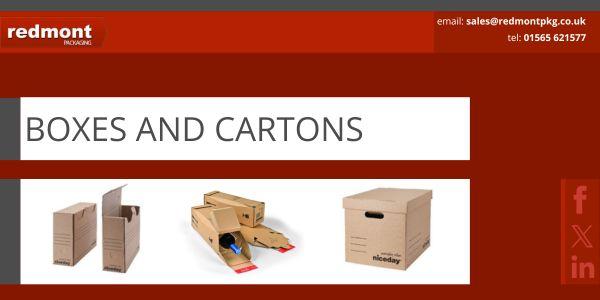
Redmont Packaging supplies a large variety of mailing items, including envelopes, packaging tape, and mailing bags, as well as boxes and cartons. We’ve made our range incredibly broad because we know that products can vary in size, weight, shape, and fragility. These variations mean that certain products may need larger, more protective forms of packaging, whereas smaller and less delicate goods can afford to be sent in thinner containers or envelopes.
Out of the many packaging options available, boxes and cartons are two of the most popular choices. Businesses use both for shipping, but each serves a slightly different purpose. With this in mind, how exactly do you know which one is right for your business? With a better understanding of the advantages of each option, the key factors to consider, and a few expert recommendations from us, you’ll be in a great position to make the right choice.
What’s the Difference Between Boxes and Cartons?
In order to find out which postal product is best for shipping out your company’s products, it’s helpful to learn about their differences. Boxes refer to containers which are usually made of corrugated cardboard. This material includes a fluted layer of cardboard which is sandwiched in between two flat layers, giving them great shock absorption and rigidity. These attributes make them a common choice for transporting heavy or fragile goods. Cartons, on the other hand, are usually lighter and thinner than boxes and are often made of paperboard, clipboard, or thin cardboard. Their less protective nature makes them better suited for lighter products and items that don’t need as much protection during transit.What Are the Benefits of Boxes and Cartons?
The unique composition of each product means they both offer different advantages, which might make one option more favourable for you than the other. Here’s a more detailed overview regarding the benefits of boxes and cartons:Advantages of Boxes
Firstly, corrugated boxes are exceptional when it comes to protecting heavy or delicate shipments. Their multiple layers can absorb impacts and resist crushing better than cartons and a lot of other mailing products on the market. This crush resistance also makes them suitable for stacking, making them great for bulk shipments and storage. Boxes are also quite versatile, coming in many sizes and thicknesses, meaning you’re likely to find one that can fit nicely around your product without leaving massive gaps.Upsides of Cartons
Cartons are lightweight and usually less heavy than boxes. This means they can help save weight, which may even result in lower shipping costs. The fact they’re lightweight also means that cartons are also usually more affordable, as less material is needed to make them. Another advantage of cartons is that many of them are designed with convenience in mind, meaning that they’re easy to open and seal/reseal.Factors to Consider When Choosing Between Boxes and Cartons
As well as being aware of each mailing item’s specific benefits, it’s also useful to think about your products’ unique needs. Here are a number of factors to consider when it comes to choosing between boxes and cartons.Product Weight
Heavy products, such as large electronics, will likely demand packaging with a more rigid structure, which makes corrugated cardboard boxes the better option of the two. Lightweight products, like books and cosmetics, can be shipped in cartons.Product Fragility
If your product is very fragile and can easily break or dent, then be sure to opt for the added cushioning and durability of a box. Some items, like metal tools and rubber products, are usually a lot tougher and can afford to be sent in a less-cushioned container like a carton.Size and Shape of Items
If your business sells oddly shaped items, like wine bottles, then you may need to go for specially designed boxes that contour to specific, unusual shapes.Environmental Considerations
When weighing up different packaging options, their eco-friendliness will often come to mind. In this instance, however, both products are very friendly for the environment, as they’re often recyclable and sometimes even biodegradable.A Few Specific Recommendations
To further aid you in deciding between cartons and boxes, we’ve provided you with a few specific recommendations so that you have an even better idea of what to pick. Your business may even sell some of these items, which will make the selection even easier!Boxes Are Best For:
- Wine bottles and glassware.
- Home appliances.
- Industrial parts.
- Art and framed pictures.
Cartons are Best For:
- Cosmetic products.
- Snacks and dry foods like cereal.
- Pharmaceutical items.
- Books and catalogues.
- Stationery items.