We use cookies to make your experience better. To comply with the new e-Privacy directive, we need to ask for your consent to set the cookies. Learn more.

Small vs. Large Bubble Wrap – Which One is Best for Your Packaging Needs?
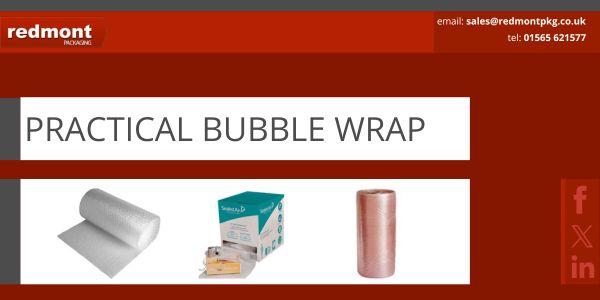
At Redmont, we stock a wide variety of packaging products to provide much-needed safety for your items when they’re being shipped to your customers. Among our most popular mailing solutions is our bubble wrap, which is helping businesses across the UK protect delicate ornaments, valuable electronics, and much more.
Our wrap comes in numerous sizes, and it’s important that you know whether to use small or large bubble wrap depending on what you’re sending. It might seem like a small detail, but choosing the right size can further improve the protection of your items, the efficiency of your packing process, and even the cost of your deliveries, making it a very important decision that you shouldn’t disregard.
Whether you’re sending out fragile homeware, tech gadgets, or bulky ornaments, it’s important to precisely match your packaging to your product needs. We’re here to help by explaining the key differences between large and small bubble wrap, along with when to use each one, so that you can ship with confidence.
A Closer Look at Small Bubble Wrap
Small bubble wrap typically has bubbles that are around 10 mm in diameter and packed closely together. The wrap itself is thin, highly flexible, and easy to mould around irregularly shaped or small items. Because each bubble contains small pockets of air, small bubble wrap can offer valuable impact protection, whilst the outer layer can provide surface protection and scratch resistance. Its lightweight nature also means small bubble wrap adds minimal bulk to parcels, helping to control postage costs, particularly for small businesses shipping via Royal Mail or other carriers with strict size/weight brackets. This lightness also means small bubble wrap can work brilliantly for layering, meaning you can wrap multiple items individually, then pack them together in one box for more efficient mailing. Small bubble wrap is often used in e-commerce parcels, especially for very small items like cosmetics, accessories, and books. You can also expect to see it used for glassware, ceramics, circuit boards, and many other small/fragile items.A Closer Look at Large Bubble Wrap
Large bubble wrap features air pockets that are typically 20 mm to 25 mm in diameter, containing more air and offering greater shock absorption. The wrap itself is also usually thicker and more padded, making it ideal for cushioning heavy and fragile items, such as sculptures, mirrors, and coffee machines. These bubbles are spaced slightly further apart than in small bubble wrap, which means the material tends to be a bit less flexible but even more protective. Large bubble wrap can also act as a fantastic void filler, cushioning large packages and filling in extra space. Like small bubble wrap, large bubble wrap is typically made from low-density polyethylene (LDPE), allowing it to be tear-resistant and moisture-resistant. This means it can withstand rough handling during warehousing, courier transit, or long-term storage. Some versions may even come with laminated layers for added strength, or in anti-static variants for protecting electronic components.Key Differences Between Large and Small Bubble Wrap
-
Cushioning Power and Impact Protection
-
Flexibility and Ease of Wrapping
-
Storage and Shipping Space Considerations