When it comes to receiving letters, you likely focus on the actual messages rather than the
envelopes that protect them. However, despite being often overlooked, this mailing product has a much richer history than what you might realise; one that’s full of evolution and fascinating heritage.
For centuries, envelopes have been more than just carriers, protecting privacy and conveying prestige. From hardened clay casings in ancient Mesopotamia to elegant stationery sets in Victorian England, envelopes have played a crucial role in human history, and understanding more about this role means we can uncover a vital part about how societies have connected and governed through time. Let’s take a closer look at the complete history of envelopes, starting with their origins in ancient Mesopotamia.
Clay Envelopes in Ancient Mesopotamia
The first known envelopes date all the way back to around 2000 BCE in ancient Mesopotamia, specifically in Sumer. These weren’t envelopes as we recognise them today, but instead, they were small clay shells designed to encase small clay tablets. These tablets were typically etched with
cuneiform script detailing contracts, promissory notes, or agreements.
To protect the contents, scribes would create a thin clay casing around the tablet. Once the inner tablet was enclosed, the outer shell was then marked with a duplicate version of the text, or a summary, before being baked or dried. Not only was this casing strong, but it would also be obvious if someone broke the outer casing, and this tamper-evident design principle is actually still present in a lot of modern packaging products, such as
mailing bags and
cardboard boxes.
Wax Seals in Ancient Egypt and Greece
Several centuries later, the ancient Egyptians and Greeks used papyrus for written media, which was an early form of paper made from the pith of the papyrus plant. Letters, decrees, and religious texts were now written on scrolls, and whilst clay envelopes were no longer necessary, the need to protect written content still remained. To maintain secrecy and authenticity, scrolls were folded or rolled and then tied with string. A dollop of wax would then be applied to the knot or fold, and a personalised seal would be pressed into the wax. This created a secure, verifiable enclosure that functioned similarly to a modern signature and also acted as a tamper-evident seal. In both Egypt and Greece, it’s clear that the envelope was a symbol of trust, confidentiality, and social status.
The Roman Empire and Folding Letters
The Roman Empire also developed their own way of sending mail across continents. Letters were folded multiple times in complex patterns to hide the writing and then tied with string and sealed with wax, often multiple times for high-security messages. Whilst the use of wax is something that the Greeks and Egyptians did, the Romans were known to use lavish wax colours to indicate their status, making this one of the earliest instances of envelopes being customised so that, as well as being practical in nature, they were also able to convey style and individuality and make a statement.
The Rise of Paper Envelopes in 17th and 18th Century Europe
By the 17th century, paper became more accessible, though it was still expensive, and the wealthy began to use actual paper envelopes, folded from a single square sheet, to enclose their letters. These handmade envelopes were cut with knives or templates and often had intricate designs, especially in noble or courtly circles. By the 1830s, British stationers introduced envelopes with pre-gummed flaps. These could be sealed simply by moistening the glue strip, and whilst we may take this for granted now, it was revolutionary back then, making envelope use much more practical.
The Victorian Era and Mass-Mailed Envelopes
The Industrial Revolution made envelope usage even more widespread. In 1845, Edwin Hill and Warren De La Rue patented the first envelope folding machine in England, and this machine could cut, fold, and glue envelopes quickly, beginning an age of mass production which made envelopes more accessible to the public. As well as a boost in production, envelope usage also increased due to reasons such as rising literacy rates, an expanding postal service, and more affordable stationery.
Modern Envelopes
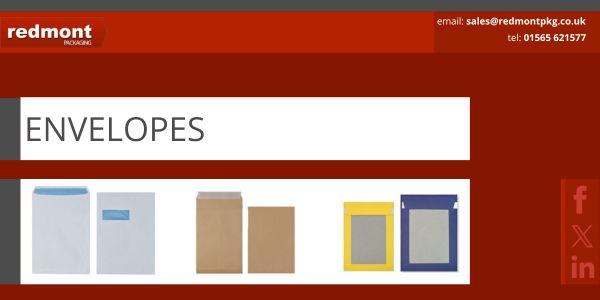
Whilst today’s standard envelopes are strikingly similar to those from the Victorian era, there are also more modern variants that have been designed with additional convenience and style in mind. For example, there are windowed envelopes, which can display a part of a letter, such as a name or address. There are also many different colours and finishes available for envelopes, from soft muted tones to glossy and vibrant hues, making them an excellent opportunity for businesses to add visual interest and reinforce their brand. This advancement takes the performance of standard but practical Victorian envelopes and gives them an additional edge to make them more interesting, with the result being a mailing solution that’s incredibly well-rounded.
End Note
Though often dismissed as mere packaging, envelopes have, throughout history, proven themselves to be so much more than just vessels for messages. They have evolved from clay shells designed to protect cuneiform contracts in ancient Mesopotamia to elegant and intricately sealed paper forms used by the Victorians before becoming stylish, brandable tools for modern communication. What this ultimately shows is that envelopes have always responded to the needs of their time, adapting in material, form, and purpose, yet always remaining rooted in the same core function, which is to safeguard and deliver.
By tracing the envelope’s historical journey, we can uncover not just how communication has changed, but how important the idea of protecting and presenting our words has always been. The envelope stands as a small but powerful symbol of human connection, acting as a reminder that even the simplest tools can carry immense cultural and emotional weight. So, the next time you open a letter, take a moment to appreciate the envelope it came with, because it’s not just paper; it’s a piece of history in your hands.
Premium Postal Products from Redmont Packaging
We understand just how important envelopes are for securing contents and making the right first impression. That’s why we offer a wide range of envelope options, including classic white envelopes for everyday use, vibrant coloured envelopes to stand out, or eye-catching holographic designs that can leave a lasting impact. No matter what your business sells, we’re confident that our envelopes can keep your contents secure and presentable during transit. We also stock other postal essentials, including bubble wrap, packaging tape, and much more, making us your destination for all kinds of reliable packaging. To discover our full stock of products,
browse our website today. If you have any questions, please contact us by calling 01565 621577.