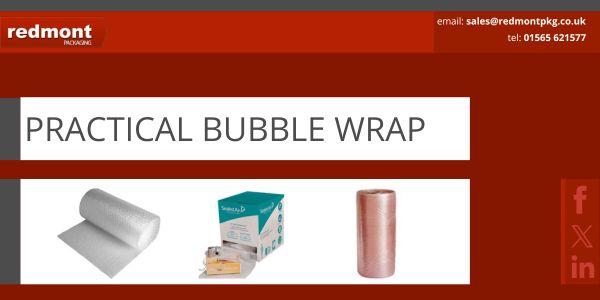
Protective packaging is a key part of making sure goods reach their destination in good condition, regardless of whether they’re being shipped to customers, transferred between sites, or stored for later use. During transit, parcels can be exposed to a range of handling conditions, including vibration, stacking pressure, and repeated movement through sorting systems, and because of this, choosing the right packaging material is highly important.
Bubble wrap has become one of the most popular protective materials because of its ability to effectively cushion items against impacts and remains a practical and reliable option, especially when fragile goods are involved. However, bubble wrap is not always the most suitable choice for every product, and in many situations,
roll kraft paper can instead provide the right level of protection you need, focusing on stability, surface protection, and space filling when shock absorption isn’t a top priority. Understanding when roll kraft paper is the better option is really useful, as it can help businesses pack more efficiently, reduce unnecessary materials, and ensure items arrive in the condition intended. But what is roll kraft paper, exactly, and what does it offer when it comes to packaging and wrapping?
What Is Roll Kraft Paper, and What Does It Offer?
Roll kraft paper is a strong paper-based packing material made from wood pulp that offers great tear resistance and a flexible nature. Supplied in continuous rolls, it can be cut to the required length, which makes it practical for use in busy packing and fulfilment environments. The natural strength of the paper allows it to be folded, wrapped, or crumpled without breaking down, providing reliable protection for a wide range of items. When used for packing, roll kraft paper creates a protective layer around products that helps prevent surface damage such as scratches, scuffs, and marks. It’s particularly effective for wrapping flat or rigid items, where maintaining surface condition is more important than cushioning against impact. Kraft paper can also be used to fill empty space within cartons, holding items in place and reducing movement during transit. This ability to stabilise contents makes it a valuable alternative to bubble wrap in situations where shock absorption is not essential.
Comparing Roll Kraft Paper and Bubble Wrap
Both roll kraft paper and bubble wrap serve important roles in packaging, but their performance differs depending on the situation. Bubble wrap excels where impact protection is the primary concern, and items such as glassware, electronics, or ceramics often benefit from the shock absorption that bubbles provide. In contrast, roll kraft paper typically performs well where stability and surface protection matter more than cushioning. For rigid or flat items, excessive cushioning may not be necessary. In these cases, wrapping with kraft paper helps keep surfaces clean and unmarked whilst allowing items to fit neatly within a box. Kraft paper can also support tighter packing, which can reduce movement and make better use of available space. By understanding these differences, packers can select the material that best matches the risks involved in transit.
When is Roll Kraft Paper the Better Choice?
Roll kraft paper is often more suitable for items that are robust but still require care. Products such as books, printed materials, metal components, wooden items, or boxed goods benefit from being wrapped to prevent scuffs and rubbing during transport. Kraft paper can be shaped around these items, providing a snug fit that limits movement without adding unnecessary bulk. It’s also a practical choice for filling voids within cartons. Empty space allows items to shift, which can lead to damage even if the product itself is strong. By crumpling kraft paper and placing it around items, packers can stabilise the contents and reduce the risk of movement. In these situations, kraft paper performs a similar role to bubble wrap, but with a focus on space filling and restraint rather than cushioning.
Roll kraft paper may also be the better choice in packing areas because it’s easy to dispense, cut, and apply. A single roll can be used for wrapping, layering, and void fill, which may reduce the need to switch between different materials. This can help make packing processes quicker and support consistent results across large volumes of parcels. Businesses with more limited space may also benefit from choosing kraft paper rolls over bubble wrap, as they’re compact and only take up a small amount of room. Many businesses and customers are also increasingly aware of the materials used in packaging and how they are disposed of after use. Roll kraft paper is widely recyclable and can often be disposed of through standard paper waste streams, which makes it a more suitable choice for businesses that are heavily focused on promoting a sustainable image.
Situations Where Bubble Wrap Still Plays an Important Role
It’s important to recognise that bubble wrap continues to be a valuable packaging material. Fragile items that are sensitive to shock or vibration often require the cushioning that bubbles provide, and in some cases, combining materials may actually be the most effective approach. For example, an item might be wrapped in bubble wrap for impact protection and then secured within a box using kraft paper as void fill. This layered approach allows packers to address multiple risks at once. Understanding when to use each material means that products can receive the right level of protection without unnecessary wastage or cost. Bubble wrap and roll kraft paper each have strengths, and neither replaces the other entirely.
End Note
Choosing the right protective packaging depends on understanding how an item will be handled and what type of protection it actually needs. Bubble wrap continues to be a useful option for cushioning fragile goods and reducing the risk of impact damage. Roll kraft paper, however, is often better suited to situations where surface protection, stability, and efficient space filling are the main priorities. By recognising the strengths of each material and using them where they perform best, businesses can pack more effectively, reduce unnecessary materials, and help make sure that goods consistently arrive at customers’ doors in good condition.
Roll Kraft Paper and Bubble Wrap at Redmont
No matter if you’ve decided that bubble wrap or roll kraft paper is the best option for your packaging needs, or if you even plan to use both, we’re confident that our collection of mailing items can help protect your parcels and avoid damage. Our
bubble wrap is available in a variety of formats to provide reliable cushioning for fragile goods, helping absorb impact during handling and transit. Alongside this, our
roll kraft paper offers a strong and flexible option for wrapping, surface protection, and void fill, supporting stable packing and clean presentation. By offering both materials in multiple sizes and quantities, we make it easier to choose the right packaging for each job whilst keeping your packing process efficient and consistent.
Browse our website today to learn more about our bubble wrap and roll kraft paper, or call 01565 621577 if you have any questions.